
Clube Cético
Fake News - o que a Ciência já sabe sobre isso
Autor: EuSouOqueSou | Categoria: História, Sociedade, Comportamento e Filosofia | Exibições: 5886 Comentários: 134

Registrado em:
08/09/2009, 15:09
Comentários: 1954
Tópicos criados: 101
Idioma:
Citar
http://g1.globo.com/e-ou-nao-e/noticia/o-que-a-ciencia-ja-descobriu-sobre-as-noticias-falsas.ghtml
Mais links e pesquisas referenciadas no site.
O que a ciência já descobriu sobre as notícias falsas
Pesquisadores tentam entender como se espalham as 'fake news'. Veja alguns estudos já realizados.
O grande volume de notícias falsas na internet e sua crescente velocidade de disseminação em redes sociais já é alvo de estudos científicos há alguns anos. Diante das evidências de que esse tipo de informação pode ter consequências impactantes para a sociedade, os especialistas querem entender melhor como as pessoas consomem e distribuem as informações.
Veja abaixo as conclusões de quatro estudos recentes sobre as chamadas "fake news":
Quem compartilha a notícia influencia mais na credibilidade que a fonte da notícia
Uma pesquisa feita pela agência Associated Press e o American Press Institute concluiu que o fato de uma pessoa que compartilhou uma notícia ser considerada confiável influencia mais na confiança que o leitor deposita na informação que a fonte primária de uma notícia.
No estudo, as pessoas pesquisadas avaliaram de forma muito diferente as notícias compartilhadas por personalidades em que confiavam, como a apresentadora Oprah, por exemplo, em comparação com notícias de alguém em quem não confiavam.
No entanto, não fizeram muita diferença em relação a se estavam publicadas no site de um veículo de confiabilidade reconhecida, como o da própria Associated Press, ou um site qualquer inventado. Para testar isso, os autores do estudo criaram uma página fictícia chamada DailyNewsReview.com, mas isso pouco afetou na impressão dos entrevistados sobre as notícias que liam.
O teste foi feito usando celebridades como fontes de notícias, mas é de se imaginar que o mesmo valha para pessoas não famosas que compartilham informação em redes sociais. Ou seja, o usuário tende a valorizar bastante a notícia compartilhada por um familiar em quem confia mais, por exemplo. O que, evidentemente, pode ter implicações se esse familiar "confiável" compartilha notícias falsas.
Jovens estudantes também não têm muita clareza sobre a credibilidade da informação na internet
Pesquisadores da Universidade Stanford, nos EUA, aplicaram questionários a alunos de ensino fundamental, médio e superior, e analisaram mais de 7.800 respostas para chegar à conclusão de que, de modo geral, eles apresentam pouco discernimento sobre o que é uma fonte de informação que pode ter credibilidade, e não separam o que é conteúdo jornalístico de conteúdo patrocinado, mesmo quando isso está claramente escrito.
"Muitos assumem que, por serem fluentes nas mídias sociais, os jovens são igualmente espertos em relação ao que encontram por lá. Nosso trabalho mostra o contrário", dizem os autores. Mais de 80% dos jovens pesquisados acharam que um conteúdo patrocinado era uma nota jornalística.
Uma seção "Sobre o autor" bem escrita e com aparência profissional é o suficiente para convencer os jovens americanos de que um site é neutro e tem credibilidade. Eles também não questionam a veracidade de fotografias e a maioria não consegue avaliar se um tuíte é parcial ou tem isenção.
Exclusão social tem relação com propensão a acreditar em conspirações
Um trabalho da Universidade de Princeton concluiu que o sentimento de exclusão social pode levar as pessoas a buscar significado em histórias mirabolantes que podem não ser verdadeiras.
Esse pensamento conspiratório leva a um ciclo perigoso. Quando as pessoas com ideias conspiratórias compartilham suas crenças, podem se afastar mais da família e dos amigos, provocando ainda mais exclusão. Isso pode levá-los a se juntar a comunidades que compartilhem as teorias da conspiração, onde se sentem bem-vindos, o que, por sua vez, irá reforçar ainda mais suas crenças.
"Tentar interromper este ciclo pode ser a melhor aposta para alguém interessado em contrariar as teorias de conspiração no nível da sociedade", diz Alin Coman, professor-assistente de Psciologia em Princeton. "Caso contrário, as comunidades poderiam se tornar mais propensas a propagar crenças imprecisas e conspiratórias."
As pessoas podem ser 'vacinadas' contra as notícias falsas
Cientistas das Universidades de Cambridge, no Reino Unido, e Yale e George Mason, nos Estados Unidos, propuseram uma espécie de "vacina" para imunizar as pessoas contra boatos.
Fazendo testes com um grupo de pessoas, eles notaram que uma notícia verdadeira, ao ser contraposta a uma mentirosa, muitas vezes é "anulada" -- a mentira, para um leitor desavisado, tem tanto peso quanto a verdade.
Os pesquisadores, então, tentaram expor as pessoas de forma preventiva a pequenas doses da informação mentirosa, como uma forma de alerta, avisando-as, por exemplo, que existem pessoas espalhando boatos sobre determinado assunto. Expostos a essa "vacina", posterioremente, quando confrontados com uma notícia verdadeira e uma mentirosa sobre um mesmo assunto, os participantes da pesquisa já não deram tanto valor à falsa.
Segundo os pesquisadores, técnicas de "inoculação psicológica" como essas foram utilizadas no passado pelas indústrias do tabaco e do petróleo para abalar um consenso científico junto à opinião pública.
http://g1.globo.com/e-ou-nao-e/noticia/o-que-a-ciencia-ja-descobriu-sobre-as-noticias-falsas.ghtml
Mais links e pesquisas referenciadas no site.
0
0
0
0
0
0
0
Data da postagem: 01/04/2017, 09:09
Registrado em:
08/09/2009, 15:09
Comentários: 1954
Tópicos criados: 101
Idioma:
Citar
http://g1.globo.com/e-ou-nao-e/noticia/facebook-e-google-miram-modelo-de-negocio-das-noticias-falsas-entenda.ghtml
Facebook e Google miram modelo de negócio das notícias falsas; entenda
Empresas tentam punir financeiramente autores de fake news para evitar disseminação. No caso do WhatsApp, no entanto, não há nenhum tipo de sistema que viabilize o apontamento de informações mentirosas.]
http://g1.globo.com/e-ou-nao-e/noticia/facebook-e-google-miram-modelo-de-negocio-das-noticias-falsas-entenda.ghtml
0
0
0
0
0
0
0
Data da postagem: 02/04/2017, 09:50
Registrado em:
08/09/2009, 15:09
Comentários: 1954
Tópicos criados: 101
Idioma:
Citar
https://www.nature.com/news/shining-a-light-on-the-dark-corners-of-the-web-1.22128
Shining a light on the dark corners of the web
Cybercrime researcher Gianluca Stringhini explains how he studies hate speech and fake news on the underground network 4chan.
...
[In your paper on the arXiv2, you show that 4chan boards can influence the sharing of other news sources.]
Here, we studied whether, once an event happens on one Internet platform (say, a hyperlink to a piece of news), the same event happens on another platform. It will be the exact same news link being posted on /pol/ that then makes its way to Twitter, let’s say. We use a mathematical technique called 'Hawkes-process modelling', in which we can say with reasonable confidence that a particular event actually is related to the previous one that happened.
So we did this study, the first of its kind in tracing links between services. The idea here is that there has been quite some work on studying fake and alternative news. People look at how alternative news spreads on Twitter, for example; how people reshare it. But these services do not live in a vacuum — they’re part of the greater web. These places where alternative news stories are posted and they talk about them and they make up these crazy conspiracies and all of that: we wanted to understand whether this actually has an impact on the wider web.
What we found is that Twitter influences the other services a lot, which makes sense. Users of /pol/ and reddit will see news on Twitter, and then they will post those stories on their own boards and talk about them. But we also found that the opposite happens. To give you an example, we found that about 12% of the alternative news on worldnews — one of the main news boards on reddit — is coming from 4chan. And over 16% of the alternative news on the same board is coming from The_Donald [a specific part of Reddit used by supporters of the US president].
https://www.nature.com/news/shining-a-light-on-the-dark-corners-of-the-web-1.22128
0
0
0
0
0
0
0
Data da postagem: 10/06/2017, 15:07

Registrado em:
08/04/2017, 16:08
Comentários: 837
Tópicos criados: 26
Idioma:
Encontrei esse site que faz análise de fake news, conhecem mais algum? http://www.snopes.com/
Também há o Fábrica de Noobs, um canal no youtube, que faz interessantes desmistificações sobre assuntos populares na internet, Bruno Borges, Vídeos e fotos da Deep Web...
Espero ver logo esse sistema de análise, espero que haja neutralidade na análise das informações.
Também há o Fábrica de Noobs, um canal no youtube, que faz interessantes desmistificações sobre assuntos populares na internet, Bruno Borges, Vídeos e fotos da Deep Web...
Espero ver logo esse sistema de análise, espero que haja neutralidade na análise das informações.
0
0
0
0
0
0
0
Data da postagem: 11/06/2017, 19:19
Registrado em:
08/04/2017, 16:08
Comentários: 837
Tópicos criados: 26
Idioma:
O poder dos hoaxes
Citar
https://www.vice.com/en_us/article/fake-news-has-terrifying-power-over-the-real-world
Citar
Fake News Has Terrifying Power Over the Real World
This week reminded us how hoaxes can have horrible consequences.
Welcome back to Can't Handle the Truth, our Saturday column looking at the past seven days of fake news and hoaxes that have spread thanks to the internet.
The New York Times made a neat infographic this week about a lie winding its way through the layers of sketchy media and becoming what looked like a real news story. In this case, someone wrote a weird piece of (possibly satirical) military fan fiction about a Russian war plane using advanced electronic weaponry to disable an American destroyer. The fake story kept popping up here and there for about three years, changing substantially with each iteration, before a version of it wound up on the Fox News website. (Fox has since deleted the story.)
What's worrying about this isn't the fairly minor takeaway from this specific case (someone might think Russians have slightly better weapons than they actually do). The scary part here is twofold: A) it's not an isolated incident, as we saw last month when Sean Hannity insisted on covering a false and deeply toxic conspiracy theory. And B) the President of the United States is a Fox News fanboy.
This week was full of examples of fake news having real consequences:
The Leader of Qatar Is in Love with Iran
Back on May 23, a news report from the state news agency of Qatar said Sheikh Tamim Bin Hamad Al Thani, the emir of Qatar, had given an inflammatory commencement speech at a military graduation ceremony. He supposedly used his time on stage to lambast his fellow Arab leaders' anti-Iran statements made while Donald Trump was visiting Saudi Arabia. The speech touched on many sensitive, hot-button topics. For instance, he also had kind words for Hamas, a group that other Gulf countries (and the US) considers a terror group.
But that news report turned out to be the work of hackers, and if the intention was to inflame existing regional tensions, it worked perfectly. Saudi Arabia and the United Arab Emirates (UAE) responded almost immediately, by blocking all Qatar-based media on the May 23. Things escalated further about two weeks later when Saudi Arabia, the UAE, Yemen, Egypt, the Maldives, and Bahrain all cut off ties to Qatar. This was the result of not just the report, but longstanding tensions over Qatar's alleged support of terrorist groups.
This situation is now a crisis, jeopardizing the wellbeing of the people of Qatar. The isolated country, which is reliant on foreign trade, can no longer use its land border or receive shipments of food.
Families of Sandy Hook Victims Are Just Faking It
Some conspiracy theories are goofs that seem like no one could possibly believe them, and it wouldn't really matter if anyone did—the Dead Munchkin Myth for instance. So it's sometimes hard to get into the headspace of someone like Lucy Richards, who believed so completely that the 2010 Sandy Hook shooting was a false flag attack designed to undermine her Second Amendment rights—a totally bonkers idea that makes no sense—that she sent death threats to the father of a six-year-old victim last year.
This week Richards was sentenced to five months in prison followed by five months of house arrest. "Your words were cruel and insensitive. This is reality and there is no fiction. There are no alternative facts," District Judge James Cohn told her at her sentencing.
Scientists Agree: Climate Change Is A Hoax
According to James Delingpole, a British climate change denier who writes a lot of breezy but haphazardly researched blog posts, there's a new consensus on climate change. That merited a Breitbart post headlined "'Global Warming' Is a Myth, Say 58 Scientific Papers in 2017." I don't know how many clicked on this post, but since it's attracted nearly 10,000 comments already, I gather it was read and shard extensively.
The substance of Delingpole's claim comes from a post at something called "No Tricks Zone," which aggregated 80 graphs that are only connected insofar as they're climate-related and not "hockey stick"-shaped. Delingpole's post acknowledges recent climate change, but basically dismisses it as insignificant in the long run, and says the idea that climate change merits changes in human behavior "is a fake artefact."
But nothing Delingpole quotes even remotely disproves the extremely true fact that Earth is rapidly increasing to a temperature inhospitable to life as we know it, because humans emit greenhouse gases. Snopes.com—a very good and valuable website—contacted the climate scientists whose graphs were being used in this way, and the ones who responded seemed revolted. For instance, the University of Maine's Paul Mayewski, who wrote one of the studies, called the Delingpole article "yet another example of downright lies."
https://www.vice.com/en_us/article/fake-news-has-terrifying-power-over-the-real-world
0
0
0
0
0
0
0
Data da postagem: 11/06/2017, 19:25

Registrado em:
27/01/2005, 00:05
Comentários: 37936
Tópicos criados: 1126
Idioma:
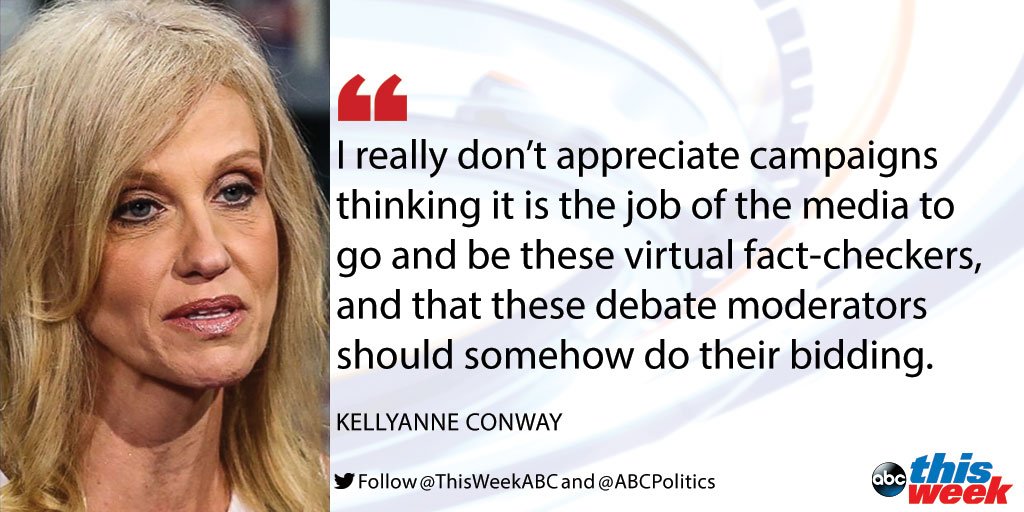

E ao mesmo tempo Trump conseguiu se consagrar praticamente "dono" da expressão "fake news" para os seus seguidores fiéis. Duplipensar nivel petista 2 plus.
0
0
0
0
0
0
0
Data da postagem: 12/06/2017, 05:57

Registrado em:
05/04/2016, 20:20
Comentários: 4206
Tópicos criados: 5
Idioma:
Lembrei dessa tirinha.

0
0
0
0
0
0
0
Data da postagem: 12/06/2017, 08:33
Registrado em:
27/01/2005, 00:05
Comentários: 37936
Tópicos criados: 1126
Idioma:
0
0
0
0
0
0
0
Data da postagem: 15/06/2017, 16:28
Registrado em:
27/01/2005, 00:05
Comentários: 37936
Tópicos criados: 1126
Idioma:
Citação de: Zero em 11 de Junho de 2017, 23:19:45
https://mediabiasfactcheck.com/
http://www.politifact.com/
Acho que o primeiro é acusado de ter viés de direita, e o segundo, de esquerda (a WP diz ter sido acusado de ambos, o que talvez seja sinal de neutralidade).
Encontrei esse site que faz análise de fake news, conhecem mais algum? http://www.snopes.com/
Também há o Fábrica de Noobs, um canal no youtube, que faz interessantes desmistificações sobre assuntos populares na internet, Bruno Borges, Vídeos e fotos da Deep Web...
Espero ver logo esse sistema de análise, espero que haja neutralidade na análise das informações.
https://mediabiasfactcheck.com/
http://www.politifact.com/
Acho que o primeiro é acusado de ter viés de direita, e o segundo, de esquerda (a WP diz ter sido acusado de ambos, o que talvez seja sinal de neutralidade).
0
0
0
0
0
0
0
Data da postagem: 15/06/2017, 16:54

Registrado em:
14/10/2014, 10:09
Comentários: 1177
Tópicos criados: 19
Idioma:
Registrado em:
08/09/2009, 15:09
Comentários: 1954
Tópicos criados: 101
Idioma:
Consegui assistir até a metade. Quem é Nando Moura? E o que o vídeo tem a ver com o tópico?
0
0
0
0
0
0
0
Data da postagem: 29/06/2017, 19:53